
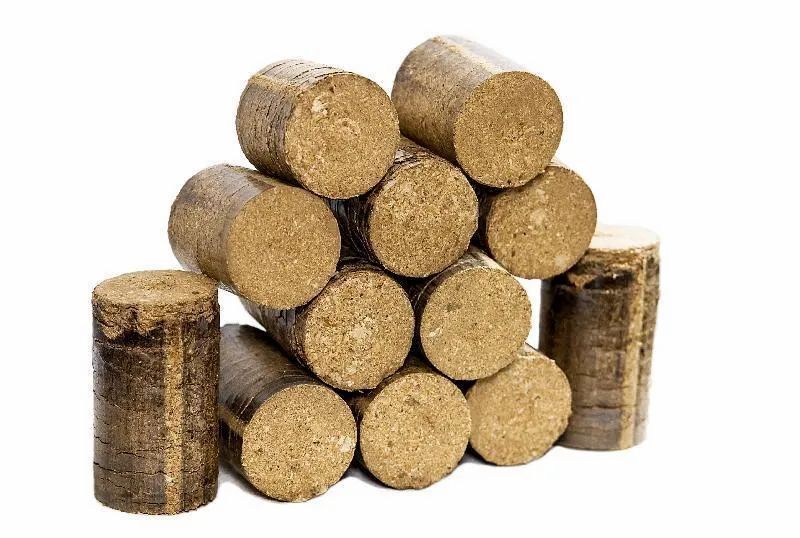
Rice husk briquettes are solid fuels made by compressing rice husks—agricultural waste leftover from rice processing—into block or cylindrical shapes. Rice husks are often considered underutilized agricultural residues.
Through briquetting technology, rice husks can be converted into an efficient and environmentally friendly fuel. For more detailed information about rice husk charcoal briquettes and their benefits, you can visit rice husk charcoal briquettes.
Benefits of Using Eco-friendly Rice Husk Briquettes
Eco-friendly rice husk briquettes offer several advantages that make them an excellent alternative to conventional fuels. These benefits not only help protect the environment but also provide economic and practical value for users.
1.Environmentally Friendly
Rice husk briquettes are made from agricultural waste, making use of resources that would otherwise be discarded. Using these briquettes can reduce deforestation, which usually results from using firewood as fuel, thereby helping to conserve forests. Additionally, burning briquettes emits lower carbon emissions compared to fossil fuels or regular firewood.
2. Reduces Pollution and Agricultural Waste
Unprocessed rice husks are often burned directly in fields, causing air pollution and environmental contamination. Turning them into briquettes allows energy production without polluting the air, which is essential for improving air quality in farming areas.
3. Renewable and Economical Energy
Rice husk briquettes have a relatively good calorific value, making them suitable for cooking, heating, or even as fuel for small industries. Since they are made from abundant waste materials, these briquettes are a more cost-effective and sustainable energy option compared to fossil fuels.
4. Easy Production and Distribution
The briquette-making process is straightforward, using press machines that can operate on small or large scales. The solid, uniform shape of briquettes also makes them easy to store and transport. Additionally, the production requires relatively low energy and minimal raw materials, making it accessible for local communities and small businesses to adopt and benefit from.
How Rice Husk Briquettes Are Made
The production starts with collecting dry rice husks. The husks undergo cleaning and drying processes to lower their moisture levels Then, the husks are compressed at high pressure using a briquette machine to form solid blocks or cylinders. Some machines add natural binders to make the briquettes more durable. Once formed, the briquettes are packaged and prepared for use as a fuel source.
Challenges and Future Opportunities for Rice Husk Briquettes
Despite their advantages, rice husk briquettes face some challenges, such as limited public awareness and restricted access to production technology in rural areas. Additionally, inconsistent quality and supply chain issues can hinder widespread adoption.
However, with government support, education programs, and investment in improved technology, the potential for briquette utilization is significant in addressing energy and environmental issues. Expanding research and development could also enhance efficiency and promote integration into larger energy systems, creating more sustainable livelihoods for farming communities.
Conclusion
Eco-friendly rice husk briquettes offer an innovative solution that combines economic and environmental benefits. By utilizing agricultural waste, these briquettes provide a clean, renewable, and sustainable alternative fuel.
Developing and using rice husk briquettes can reduce dependence on fossil fuels, decrease air pollution, and empower farming communities through better waste management. Therefore, supporting this technology is essential for a greener and more environmentally friendly energy future. For more information on sustainable energy solutions and innovations, visit Jacoid